Shiraz Travel Guide: Best Attractions and Essential Tips
Shiraz Travel Guide: Discover the Heart of Persian Culture

Welcome to Shiraz, a city that epitomizes the poetic soul and architectural splendor of ancient Persia. Located in the southwest of Iran, this city, presented by Iranvisiting, is a vibrant mosaic of history, culture, and art. Shiraz is revered as the City of Poets, Literature, Wine, and Flowers, and it rightfully earns this title through its rich heritage and stunning beauty.
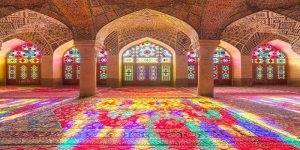
As the birthplace of legendary poets like Hafez and Saadi, Shiraz invites visitors to explore its tranquil gardens and historical sites that resonate with the echoes of these literary giants. The city’s architecture, a harmonious blend of Islamic and Persian influences, is showcased in landmarks like the Nasir-ol-Molk Mosque, renowned for its captivating stained glass that dances with colors in the morning light.
The city’s charm extends to its lush Persian gardens. The Eram Garden, a UNESCO World Heritage site, is a testament to the exquisite Persian garden design, marrying natural and architectural elements in perfect harmony. These gardens are not just visually stunning but also offer a peaceful retreat from the bustling city life.
Shiraz is also a haven for food enthusiasts, offering a delightful culinary journey through traditional Persian cuisine. From the bustling local bazaars to quaint restaurants, every dish, infused with flavors like saffron and pomegranate, is a treat to the senses. Dishes like Kalam Polo and the refreshing Shirazi Salad are local favorites that you must try.
The city’s vibrant bazaars, particularly the Vakil Bazaar, are a treasure trove of Persian crafts and art. Here, you can find exquisite handwoven carpets, intricate inlaid artworks, and a plethora of colorful handicrafts, each telling its own story of Persian culture.
In this guide, brought to you by SURFIRAN, we invite you to embark on a journey to Shiraz – a city where every corner is steeped in history and every street whispers tales of the past. For an in-depth exploration and to plan your visit, check out our detailed Shiraz Travel Guide on SURFIRAN. Join us on our Discover the Beauty of Persia in 15 Days tour for an immersive experience into the heart of Iranian culture and heritage.
Distance from Shiraz to Major Cities
One of the most important things to know before traveling to Shiraz is the approximate distance from your place of residence to this city. In this section, we have tried to summarize the distance from Shiraz to major cities in Iran so that you can plan your trip to Shiraz based on these distances.
How to Get to Shiraz?
Reaching Shiraz, a city full of charm, offers various options. Once you decide to travel, the rest becomes easy. Given that Shiraz is one of Iran’s most important tourist cities, it boasts a comprehensive intercity transportation network. You can travel to Shiraz by personal car, bus, airplane, or train, with no limitations from any part of the country.
Travel to Shiraz by Personal Car
If you’re driving from Tehran to Shiraz and prefer to use your own car, be prepared for a long drive. However, traveling by personal car lets you pass through different cities, offering more opportunities to explore. Cities like Kashan and Isfahan, with their own attractions, are on your way. Ultimately, choosing to drive depends on your mood and the distance from your city to Shiraz.
Travel to Shiraz by Train

Train travel is also a popular and cost-effective option. Many enjoy the rhythmic sound of trains for their journey. Most major cities, including Isfahan, Tehran, Mashhad, and Tabriz, have train lines to Shiraz. The duration of your train journey depends on the type of train you choose, but generally, it takes about 15 hours from Tehran.
Note: The distance from Shiraz railway station to Shiraz city center is about 35 minutes’ drive.
Travel to Shiraz by Bus

Bus travel to Shiraz is another economical option. Many travelers choose this method for its convenience. You can easily get direct bus tickets to Shiraz from most major cities, allowing you to board a bus from anywhere in Iran and head towards Shiraz.
The Shiraz Terminal is not only the largest passenger terminal in the city, but also one of the most important and busiest terminals in the country.
The Shiraz (Karandish) Terminal is well situated relative to the bus and metro stations. If you use public transportation, it’s easy for you. The distance from Karandish Terminal in Shiraz to the bus and metro stations is very short. If you want to get to the Karandish Terminal in Shiraz quickly, take a taxi to the passenger terminal.
Travel to Shiraz by Airplane
Flying to Shiraz is undoubtedly one of the quickest and most comfortable ways to travel, although it is the most expensive. Most Iranian cities have direct flights to Shiraz with various airlines. A flight from Tehran to Shiraz approximately takes an hour and twenty minutes.
Shiraz International Airport (SYZ)

Shiraz’s Shahid Dastgheib International Airport, second only to Tehran’s Imam Khomeini International Airport in terms of facilities, is located in Shiraz. The airport has two terminals: Terminal One for domestic flights and Terminal Two for international flights.
Shiraz Airport offers amenities like car parking, CIP–VIP services, various booths, flight information, currency exchange counters, and special facilities for disabled passengers.
For access to Shiraz Airport, passengers can use Metro Line One at Shahid Dastgheib Metro Station or opt for other transportation means like buses and taxis.
Best Route to Shiraz from Tehran by Airplane, Train, and Bus
If you’re starting from Tehran and choose to fly to Shiraz, your journey will take approximately one hour and ten minutes, not accounting for any flight delays.
The distance from Tehran to Shiraz, if you’re driving a personal car from the capital’s center, is around 910 kilometers. The travel time will be about 10 hours, not including any stops along the way.
Traveling to Shiraz by bus will also take around the same duration, excluding the time spent on breaks. To catch a bus from Tehran to Shiraz, you need to get to one of the bus terminals located in the West, South, or Beihaghi areas.
If you prefer to travel by train, it’s important to know that this method will take you about 16 hours to reach Shiraz.
The Best Time to Visit Shiraz

When planning a trip to Shiraz, timing is key to fully enjoying what this beautiful city has to offer. The best time to visit Shiraz is during the spring, specifically from late March to early May. During these months, the city is at its most vibrant, with pleasant temperatures and nature in full bloom. The famous Persian gardens, such as the Eram Garden, burst into a kaleidoscope of colors, offering an unforgettable visual feast.
Another great time to explore Shiraz is in the autumn, from September to early November. This season offers mild weather, making it comfortable for tourists to wander through the city’s historical sites and bazaars without the intense heat of the summer. The reduced number of tourists during this period also means a more relaxed and intimate experience of the city’s attractions.
It’s worth noting that summer and winter in Shiraz present more extreme temperatures. Summers can be very hot, often reaching highs that might be uncomfortable for some travelers. Winters, on the other hand, are quite cold, although they offer the chance to experience the city’s cultural sites and indoor museums in a quieter setting.
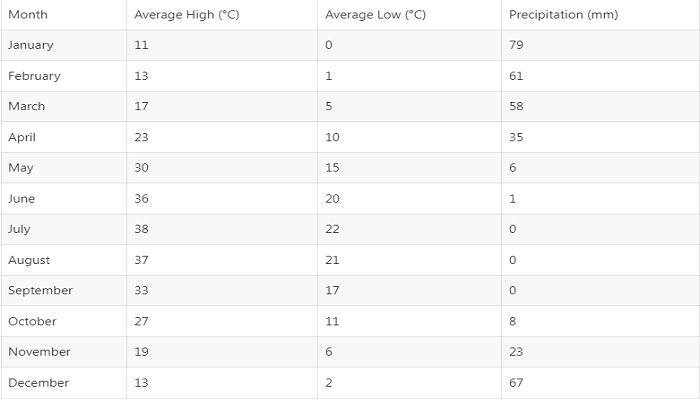
Here is an outline of the city’s climate consistently:
Climate Data for Shiraz, Iran
Spring (Walk to May)

Spring is for the most part viewed as the best opportunity to visit Shiraz. The climate during this season is gentle and charming, with temperatures going from around 15°C to 25°C (59°F to 77°F). The city is enhanced with sprouting blossoms and lavish green nurseries, making it a pleasant opportunity to investigate the city’s attractions and partake in the wonderful scenes.
Summer (June to August)
Summer in Shiraz can be very warm, with temperatures frequently taking off above 30°C (86°F) and at times coming to 40°C (104°F) or higher. It very well may be trying to investigate the city during the pinnacle of summer because of the serious intensity. Be that as it may, on the off chance that you wouldn’t fret the intensity, this season offers less groups and the chance to encounter nearby life during Ramadan, the Islamic heavenly month of fasting.
Autumn (September to November)
Fall is one more ideal opportunity to visit Shiraz. The weather conditions begins to chill off, making touring more agreeable. Temperatures range from 15°C to 25°C (59°F to 77°F), the city’s gardens stops actually offer energetic varieties and lovely outside encounters.
Winter (December to February)
Winter in Shiraz is generally gentle contrasted with numerous different districts in Iran. Temperatures range from 5°C to 15°C (41°F to 59°F). While it seldom snows in the city, the close by mountains might have some snowfall, making for a delightful setting. Winter can be a great time for spending plan voyagers as convenience and travel costs will generally be lower, and there are less sightseers.
Taking into account the lovely climate and sprouting gardens, the best opportunity to venture out to Shiraz is during spring (Walk to May) and fall (September to November). During these seasons, you can partake in the city’s social attractions, investigate the antiquated destroys, and submerge yourself in the city’s verse and artistic legacy without the outrageous temperatures of summer or the colder temperatures of winter.
Must Visit Attractions in Shiraz
Shiraz, often heralded as the cultural heart of Iran, beckons travelers with its blend of poetic heritage and historic splendor. This city, celebrated for its connection to Persian poets like Hafez and Saadi, offers an immersive cultural experience. Visitors can explore the vibrant Vakil Bazaar, a bustling hub of commerce and craftsmanship. Here, the intricate artistry of Persian rugs and the rich scents of spices fill the air.
A short distance away, the Pink Mosque (Nasir-ol-Molk Mosque) awaits. Renowned for its stunning stained-glass windows, the mosque bathes visitors in a kaleidoscope of light at sunrise. This architectural marvel represents the zenith of Persian-Islamic art.
For history enthusiasts, the nearby Persepolis stands as a testament to the ancient Achaemenid Empire. This UNESCO World Heritage Site captivates with its grand columns and detailed bas-reliefs. It’s a window into the past, revealing stories of kings and empires long gone.
No visit to Shiraz is complete without experiencing its famed gardens. The Eram Garden, with its majestic cypress trees and elegant pavilion, epitomizes the beauty of Persian landscaping. It’s a serene retreat from the city’s bustle.
Persepolis

Persepolis, an ancient marvel and a UNESCO World Heritage site, stands as a testament to the grandeur of the Achaemenid Empire. Located just an hour’s drive from Shiraz, this iconic site captures the essence of Persian civilization’s architectural and cultural achievements. The monumental staircases, towering columns, and exquisite reliefs at Persepolis tell a story of a once-mighty empire, offering visitors a glimpse into its historical significance.
This archaeological masterpiece, also known as Takht-e Jamshid, reveals the advanced architectural skills of its builders. The intricate carvings and detailed sculptures depict scenes of ancient ceremonies, royal audiences, and the diverse subjects of the vast empire.
Visitors to Persepolis can explore the remains of the Great Hall of Apadana, the Throne Hall, and the Gate of All Nations, each echoing the stories of power, diplomacy, and the cultural exchange that characterized the ancient Persian Empire.
Nasir al-Mulk Mosque (Pink Mosque)
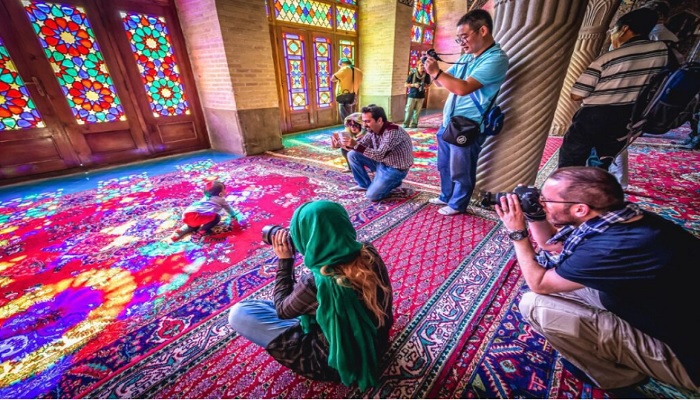
Nasir ol Molk Mosque, often referred to as the Pink Mosque, stands as a marvel of architecture in Shiraz, Iran. Built during the Qajar dynasty era, it boasts an exquisite display of Islamic architecture with an emphasis on colorful window glasses and intricate tile work. The mosque’s fame largely comes from its stunning stained-glass windows that create a kaleidoscope of vibrant colors, especially when sunlight streams through in the mornings. This exceptional use of light and color makes it a must-visit destination for travelers and photography enthusiasts.
Inside the mosque, visitors find themselves enveloped in an enchanting atmosphere where light and color blend. The mosque’s interior is adorned with beautifully crafted tiles featuring traditional geometric designs and floral motifs, a hallmark of Persian artistic expression. The harmonious combination of light, color, and Islamic architecture here not only offers a visual feast but also provides a serene space for reflection and prayer. The Nasir ol Molk Mosque is not just a religious site; it’s a celebration of art, culture, and architectural ingenuity.
Hafez Tomb (Hafeziyeh)
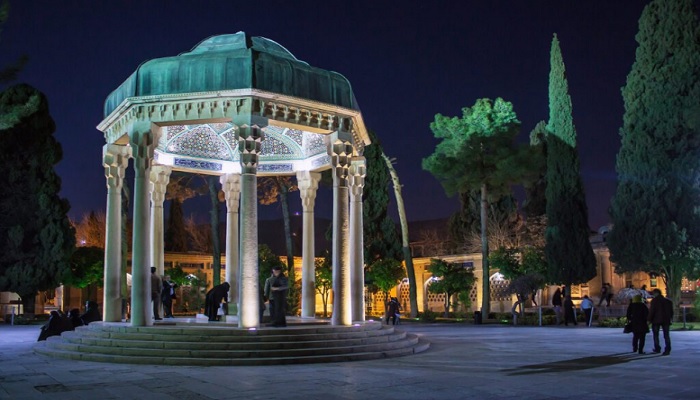
Hafez Tomb, located in the enchanting city of Shiraz, is a tribute to one of the most celebrated and revered poets in Iranian history, Hafez. Known for his profound and lyrical poetry, Hafez has influenced Persian literature significantly. The tomb, set within the serene Gardens, offers a peaceful retreat where visitors can immerse themselves in the poetic legacy of Hafez. The site features a beautifully crafted marble tombstone, inscribed with verses from Hafez’s poetry, encapsulating the essence of his profound philosophical thoughts.
The atmosphere around Hafez Tomb is one of contemplative calm, with visitors often seen reflecting on his verses or enjoying the tranquil gardens. The site also includes a small teahouse and a souvenir shop, where visitors can purchase books of Hafez’s poetry and other memorabilia. This culturally significant site does not just represent a final resting place; it is a symbol of Persian literary heritage and intellectual thought.
Eram Garden
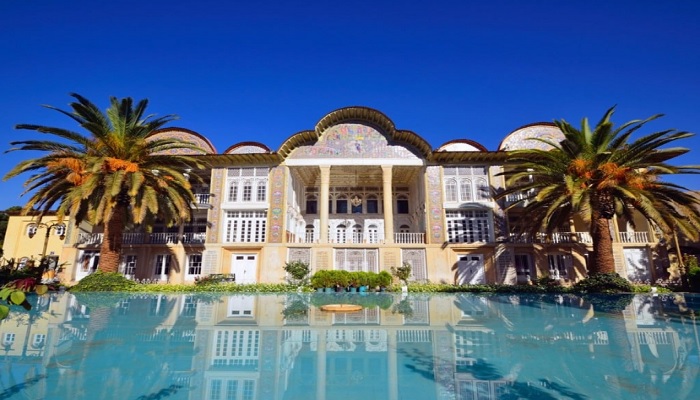
Eram Garden, a historical and picturesque site in Shiraz, is celebrated for its stunning array of botanical beauty and architectural elegance. Recognized as a UNESCO World Heritage Site, this garden exemplifies the classical Persian garden style with its symmetrical design, tranquil water features, and lush greenery. The garden’s name, ‘Eram’, suggests a utopian idea, a fitting description for this paradise-like setting. Visitors are captivated by the garden’s diverse collection of plants and the majestic Qavam House, which stands as a testament to traditional Persian architecture.
The beauty of Eram Garden lies not just in its flora and architectural wonders but also in its historical significance. It has been a source of inspiration for poets and writers for centuries. The garden’s pathways, lined with tall cypress and orange trees, lead to a central pavilion and pond, creating a serene and contemplative environment. This harmonious blend of nature and artistry makes Eram Garden a must-visit for those exploring the cultural heritage of Iran. For a detailed exploration of this magnificent site, you can find more information and guided tour options at SURFIRAN’s Eram Garden Guide, which provides a deeper insight into its history and beauty.
Vakil Bazaar
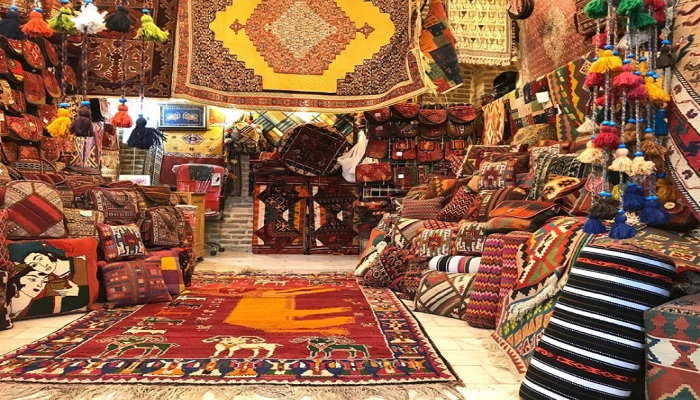
Vakil Bazaar, situated in the heart of Shiraz, is a vibrant testament to the city’s rich history and culture. Known for its traditional Iranian architecture, the bazaar is a sprawling marketplace, offering a fascinating glimpse into the everyday life and commerce of the region. It dates back to the Zand period and is well-known for its wide corridors, high ceilings, and captivating carvanserais. As you wander through the bazaar, the rhythmic blend of sounds, from the chatter of shoppers to the clinking of artisans at work, creates an immersive cultural experience.
The bazaar is not just a shopping destination; it’s a cultural journey. Each section offers unique items, from handwoven Persian rugs and exquisite handicrafts to spices and jewelry. The scent of spices and the colorful displays of goods make Vakil Bazaar a sensory delight. It is also a social hub where locals and tourists mingle, offering insights into the Iranian way of life.
Karim Khan Citadel
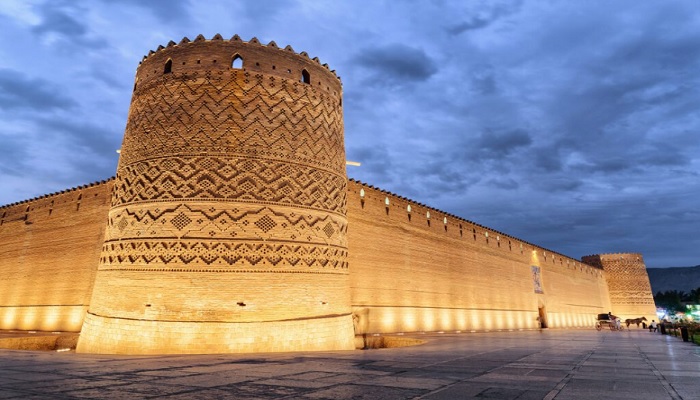
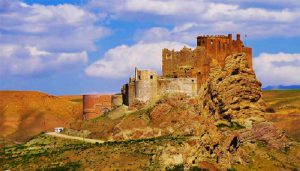
Karim Khan Citadel, located in the bustling city of Shiraz, stands as a prominent symbol of Iran’s rich history. Constructed in the 18th century during the Zand dynasty, it was the residence and stronghold of Karim Khan, who preferred the title ‘Vakil e-Ra’aaya’ (Representative of the People) over that of king. This historic fortress is characterized by its distinctive architectural features, including robust circular towers, one of which is noticeably leaning. The citadel reflects a blend of military and residential architecture, a rarity in Persian design.
Visitors to the citadel are greeted with an imposing yet elegant exterior, leading into a peaceful interior courtyard. The interior is a stark contrast to the robust exterior, featuring lush gardens and beautiful fountains. This juxtaposition symbolizes the duality of Karim Khan’s reign – strength and benevolence. The citadel has also served various purposes throughout its history, from a governor’s residence to a prison, and now stands as a museum and a window into the past.
Shah Cheragh
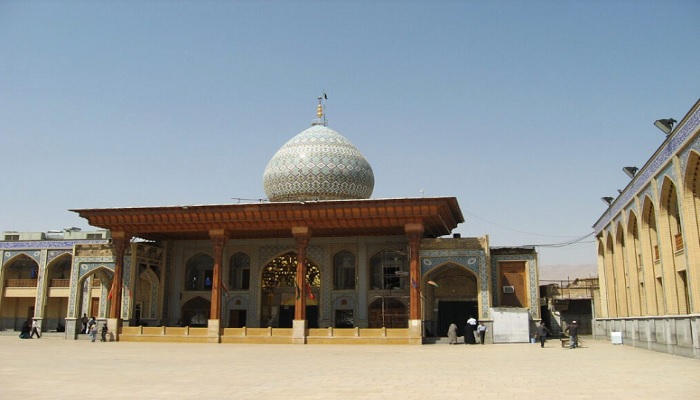
Shah Cheragh, a revered mausoleum and mosque in Shiraz, holds immense spiritual and historical significance in Iran. The site is the resting place of Ahmad and Muhammad, brothers who were the sons of Musa al-Kadhim, the seventh Shia Imam. Originating in the 12th century, Shah Cheragh is a prominent pilgrimage site, renowned for its stunning architecture and dazzling interior adorned with mirror tiles. The name “Shah Cheragh” translates to “King of the Light,” a fitting title considering the interior’s reflective brilliance, creating a mesmerizing light display that leaves visitors in awe.
This religious monument is not just a burial place; it’s a center of cultural and spiritual gatherings. The complex includes a mosque, a theological school, and a religious library, making it a hub of Islamic learning and devotion. Its intricate tile work, beautiful courtyards, and the tranquil atmosphere inside the mosque offer a glimpse into the rich cultural and religious tapestry of Iran.
Qavam House (Narenjestan-e Ghavam)

The Qavam House, also known as Narenjestan-e Ghavam, stands as a historical marvel in Shiraz, Iran. Built during the Qajar era, this elegant mansion is famous for its exquisite architecture and beautifully manicured gardens. Reflecting the quintessential Persian style, the house features intricate wood carvings, stunning mirror work, and vibrant stained glass windows. The lush garden, adorned with tall palm trees and fragrant flowers, adds a serene ambiance to this architectural gem. This house, once the residence of the Qavam family, now serves as a museum and cultural center, attracting tourists and history enthusiasts from around the world.
Visitors to Narenjestan-e Ghavam are immediately captivated by the detailed craftsmanship visible in every corner of the estate. The house’s main hall, with its elaborate ceiling decorations and artistic tilework, exemplifies the artistic heritage of 19th-century Iran. Each room within the mansion tells a story, showcasing a blend of traditional Persian art and European influences. The house also played a significant role in the history of Shiraz University, as it was used as the faculty of Asian Studies and Art for a time.
Tomb of Saadi
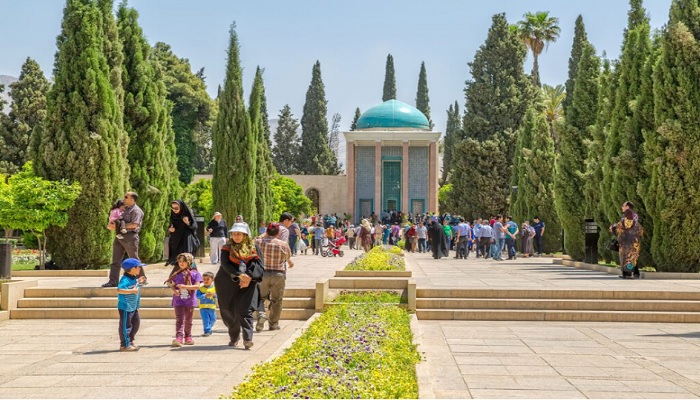
The Tomb of Saadi, known as Saadi’s Mausoleum, is a significant historical site in Shiraz, Iran. It honors the famous Persian poet Saadi, renowned for his profound impact on Persian literature. This mausoleum is not just a burial place but a tribute to Saadi’s enduring legacy. Its architectural design, featuring a beautiful dome and intricate tilework, reflects the rich Persian heritage. Inside, Saadi’s tombstone, engraved with verses from his works, offers visitors a moment of reflection and admiration. The surrounding garden, typical in Persian architecture, adds a sense of peace and contemplation to the site.
Visiting the Tomb of Saadi is a journey into the heart of Persian literary culture. Saadi, celebrated for “Bustan” and “Golestan”, is a pillar of Persian poetry. This site goes beyond being a mere resting place; it’s a cultural center where poetry enthusiasts and scholars gather to pay homage to Saadi’s contributions. The fusion of natural beauty and architectural finesse makes this tomb a key destination for those seeking to explore Iran’s rich cultural heritage.
Cultural Experiences
Shiraz offers an abundance of social encounters that permit guests to drench themselves in the rich legacy of Iran. Here are the absolute most outstanding social encounters you can appreciate in Shiraz:
Poetry and Literature
Shiraz has a well-established standing as a city of writers and researchers. Participate in verse readings at bistros or go to abstract social affairs where local people and aficionados present stanzas of popular Persian writers like Hafez and Saadi. The atmosphere and love for writing in Shiraz are really enthralling.
Persian Calligraphy
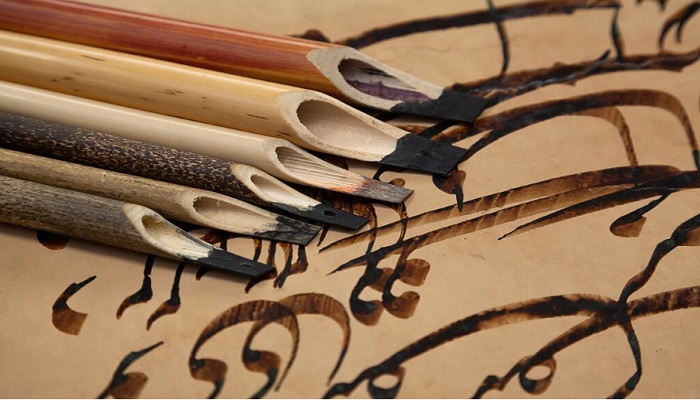
Persian Calligraphy stands as a significant and revered art form in Iranian culture, embodying the elegance and intricacy of Persian script. This art form, deeply rooted in historical and cultural traditions, has evolved over centuries. It is not just a method of writing but a creative expression that intertwines literary brilliance with aesthetic beauty. Persian calligraphy, known for its fluid lines and harmonious proportions, is a visual representation of Iran’s rich poetic and literary heritage. It has adorned everything from grand palaces to modest homes, showcasing the importance of written word in Iranian society.
This art form has produced various styles, each unique and reflective of the times and contexts in which they were developed. The most famous styles include Nastaliq, Naskh, and Thuluth, each with its distinct characteristics and aesthetic appeal. Persian Calligraphy is not merely about writing but is a sophisticated art that requires years of dedicated practice and a deep understanding of Persian literature. Today, it continues to inspire artists and calligraphers worldwide, symbolizing the timeless beauty and depth of Persian culture.
Traditional Music
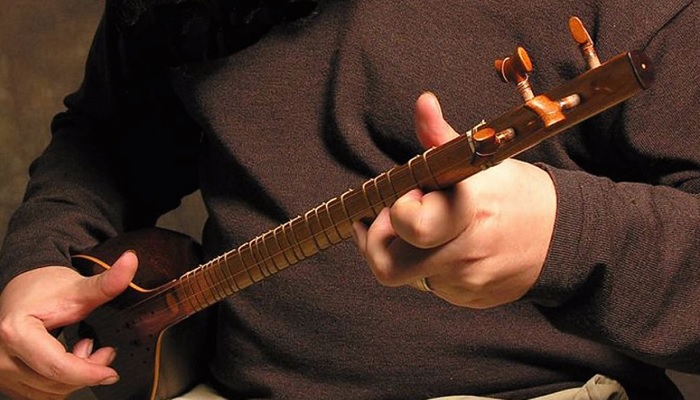
Traditional music of Iran, a profound aspect of the country’s cultural heritage, offers a melodious journey through its history and society. This music, rich in diversity and depth, is an amalgamation of various regional influences, reflecting the country’s complex cultural mosaic.
Iranian Traditional Music
Iranian traditional music, often known for its intricate rhythms and melodic nuances, uses a wide range of instruments like the setar, santur, tar, daf, and ney. These instruments contribute to the distinctive sound of Persian music, characterized by its emotive and sometimes improvisational style. The music often accompanies Persian poetry, another cornerstone of Iranian culture, creating a harmonious blend of literary and musical artistry.
Iranian traditional music has deeply influenced not only regional music styles but also significantly contributed to world music.
This genre encompasses various forms, from classical and folk to spiritual music. Each form narrates a different aspect of Iranian life, be it the everyday experiences of its people, the profound mysticism of Sufism, or the grandeur of its royal courts. This music, evolving through centuries, continues to resonate with people, offering a window into the soul of Iran. Its timeless appeal lies in its ability to convey deep emotional experiences, making it a vital part of Iran’s cultural legacy.
Carpet Weaving

Carpet Weaving in Iran is an ancient craft, deeply embedded in the nation’s culture and history. Recognized globally for their beauty and craftsmanship, Persian carpets are more than just floor coverings; they are expressions of artistic tradition passed down through generations.
Each carpet tells a story, often featuring motifs that reflect the weaver’s surroundings, beliefs, and traditions. The intricate designs, ranging from floral patterns to geometric shapes, are not just visually appealing but also hold cultural significance. The art of carpet weaving showcases the skill and creativity of Iranian artisans, making each carpet a unique piece of art.
This craft involves a meticulous process, from hand-spinning the wool to dyeing it with natural colors and then weaving it on a loom. The high-quality craftsmanship of Persian carpets makes them durable and valuable, often becoming cherished family heirlooms. Different regions of Iran have their unique styles and techniques, contributing to the vast diversity seen in Persian carpets. This diversity is a testament to the rich cultural fabric of Iran, with each region’s environment and history influencing its carpet weaving style.
Shirazi Cuisine

Explore the rich and diverse world of Iranian Cuisine, a true reflection of the country’s cultural heritage. Iranian dishes are renowned for their flavorful and aromatic qualities, often featuring a blend of spices, herbs, and fresh ingredients. One of the most distinctive aspects of this cuisine is its emphasis on balancing flavors – sweet and sour, mild and spicy. Staples include rice, a variety of meats, and an abundance of fresh fruits and vegetables. A must-try is Fesenjan, a luxurious stew made with pomegranates and walnuts, offering a unique blend of sweet and tangy flavors, often served with chicken or duck.
Specifically, Shirazi food stands out for its use of fresh herbs and ingredients like pomegranates, adding a delightful burst of flavor to every dish. The Shirazi Salad, a refreshing mix of cucumber, tomato, onion, and mint, is a perfect accompaniment to any meal. Another local specialty, Kalam Polo, combines cabbage with aromatic rice, creating a hearty and satisfying dish.
The cuisine of Shiraz mirrors the rich culinary customs of Iran, known for its assorted flavors, sweet-smelling flavors, and utilization of new fixings. Shirazi cuisine, as other Persian territorial foods, puts extraordinary accentuation on equilibrium and amicability between various components, bringing about dishes that are both delightful and outwardly engaging. Here are a few features of the cooking of Shiraz:
Shirazi Salad
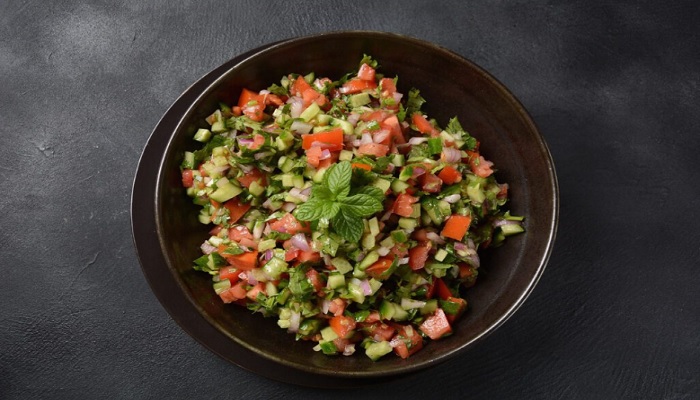
This reviving and beautiful plate of mixed greens is a mark dish of Shiraz. It commonly comprises of finely cleaved cucumbers, tomatoes, red onions, and new spices like mint and parsley. The plate of mixed greens is prepared with lime juice, olive oil, and in some cases a sprinkle of sumac for added tartness.
Ingredients for Shirazi Salad
- Cucumbers
- Tomatoes
- Red onions
- Fresh mint leaves
- Lemon juice
- Olive oil
- Salt
- Black pepper
Fesenjan

A renowned Iranian stew, Fesenjan is made with chicken or duck cooked in a rich sauce of ground pecans and pomegranate molasses. The blend of nutty and tart flavors makes a remarkable taste that is both sweet and exquisite.
Ingredients for Fesenjan
- Ground walnuts
- Pomegranate molasses
- Chicken or duck (traditionally)
- Onion
- Vegetable oil
- Sugar (optional, for sweetness)
- Salt and pepper (for seasoning)
Kalam Polo
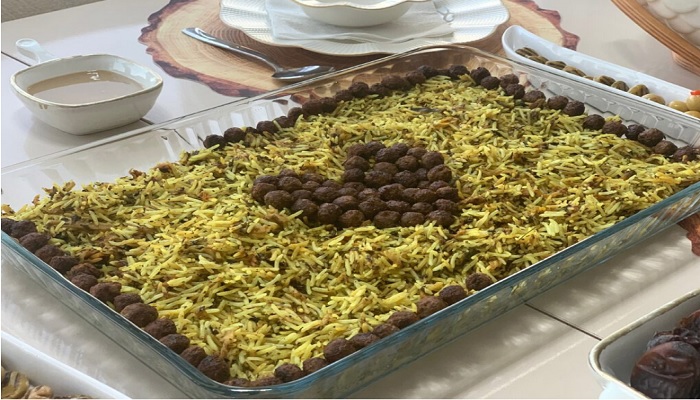
A wonderful rice dish made with layers of fragrant basmati rice and cabbage, Kalam Polo is frequently presented with delicate bits of meat (generally sheep or hamburger). The rice is seasoned with saffron, cinnamon, and other sweet-smelling flavors.
Ingredients for Kalam Polo
- Rice
- Cabbage
- Ground beef or lamb
- Onion
- Turmeric
- Cooking oil
- Dried fenugreek leaves (optional)
- Salt and pepper (for seasoning)
Baghali Polo
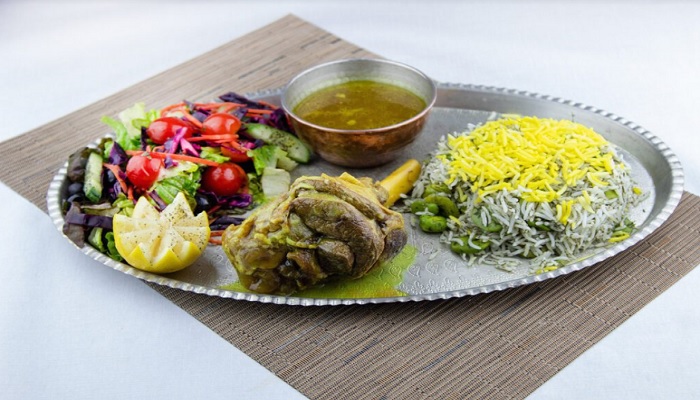
This fragrant rice dish is cooked with dill and fava beans, bringing about an energetic green and delightful mix. It is regularly presented with sheep or chicken, offering a magnificent mix of tastes and surfaces.
Ingredients for Baghali Polo
- Basmati rice
- Fresh or frozen fava beans (baghali)
- Dill weed
- Onion
- Lamb or beef (optional)
- Cooking oil
- Turmeric
- Salt and pepper (for seasoning)
Ashe Reshteh
A good and feeding soup, Ashe Reshteh is made with noodles, beans, chickpeas, new spices, and flavors. It is frequently decorated with a dab of yogurt and presented with fresh seared onions.
Ingredients for Ashe Reshteh
- Persian noodles (reshteh)
- A mixture of herbs (parsley, cilantro, spinach, and green onions)
- Kidney beans
- Chickpeas
- Lentils
- Onion
- Garlic
- Persian dried mint
- Kashk (whey or yogurt)
- Turmeric
- Salt and pepper (for seasoning)
Halim Shirazi
An extraordinary sweet porridge made with wheat, sugar, cinnamon, and spread, Shirazi Halim is many times ready during strict occasions and proposed to neighbors and the less lucky as a token of generosity.
Ingredients for Halim Shirazi
- Wheat
- Chicken or lamb (traditionally)
- Onion
- Cooking oil
- Turmeric
- Salt and pepper (for seasoning)
- Cinnamon (optional, for flavor)
Saffron Pastries

Saffron, perhaps of Iran’s most valued flavor, is much of the time utilized in different treats in Shiraz. From saffron-seasoned frozen yogurt (Bastani) to saffron-enhanced rice pudding (Sholeh Zard), these pastries have a particular and lavish taste.
Ingredients for Saffron Pastries
- All-purpose flour
- Butter
- Sugar
- Eggs
- Saffron threads
- Rosewater (optional, for flavor)
- Ground cardamom (optional, for flavor)
- Slivered almonds or pistachios (for garnish)
Shirazi Shirini (Cakes)
Ingredients for Shirazi Shirini (Cakes)
- All-purpose flour
- Sugar
- Eggs
- Baking powder
- Vegetable oil
- Rosewater or cardamom (for flavor)
- Slivered pistachios or almonds (for garnish)
Shiraz is known for its magnificent determination of baked goods and treats, frequently implanted with flavors like rosewater, cardamom, and pistachios.